Why Every Round Is 10-9 Until Somebody Goes Down
Boxing's 10-point must system explained: why almost every round is 10-9, how knockdowns make it 10-8, and what judges are actually instructed to reward.
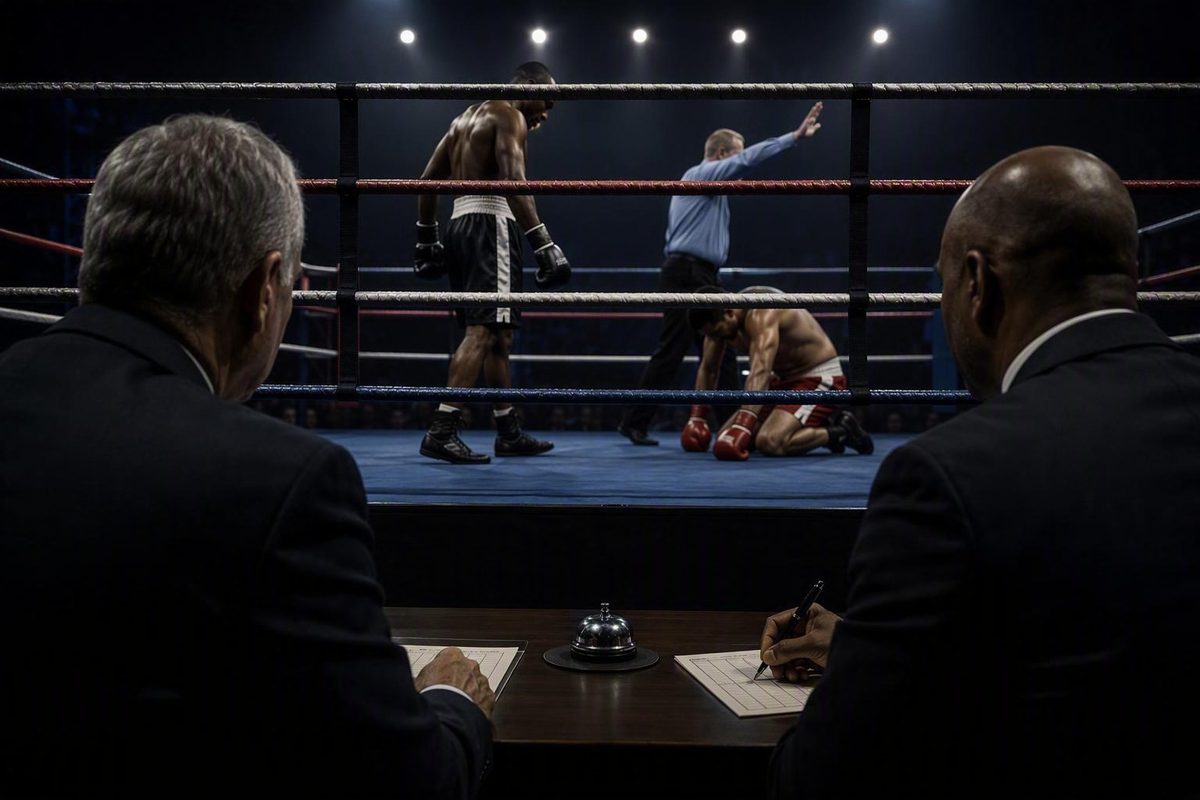
Professional boxing is scored by three judges under the 10-point must system — a name that contains the whole mechanism: the winner of each round must receive 10 points, the loser something less. How “something less” is decided explains nearly every controversial card in the sport.
The round-by-round machine
Judges score each round independently, as its own contest. The overwhelming default is 10-9: one fighter edged the round. The score moves further apart in specific circumstances:
- 10-8 — a knockdown, or a round so one-sided it resembles one. Each additional knockdown widens it again (10-7 for two).
- 10-10 — a genuinely even round; officially discouraged, and rare on professional cards.
- Point deductions — a referee (not the judges) can deduct a point for fouls, applied after the round is scored: a 10-9 round with a deduction becomes 9-9.
At the final bell the round scores are summed. Win seven of twelve rounds 10-9 with no knockdowns and the card reads 115-113 — which is why so many close fights land on exactly that number.
What judges are told to reward
The criteria, in rough order of weight: clean punching (scoring blows landed with the knuckle part of the glove), effective aggression (coming forward while landing — pressure that eats punches counts against you), ring generalship (dictating where and how the fight happens), and defense. In practice, clean punching dominates; the other criteria break ties. The judge’s eternal problem is that all of it is judged, not counted — punch statistics are broadcast graphics, not official inputs.
Why cards diverge honestly
Three competent judges can disagree because they sit on different sides of the ring, see different punches land, and weigh a 60-40 round identically to a 51-49 one — the system compresses both into 10-9. A fighter who narrowly wins many rounds beats a fighter who dominates a few; that is a design choice, not a scandal. The scandals are real too, but the geometry and the compression explain far more split decisions than corruption does.
Reading a scorecard like a judge
Score fights yourself in tens: pick a round winner every three minutes, reserve 10-8 for knockdowns or near-them, and sum honestly. You will land within a round or two of the official cards more often than the shouting suggests — and when you don’t, you will at least know exactly which rounds you disagree on.